

Tallahassee, FL Dental Crowns
Dental Crowns in Tallahassee, FL
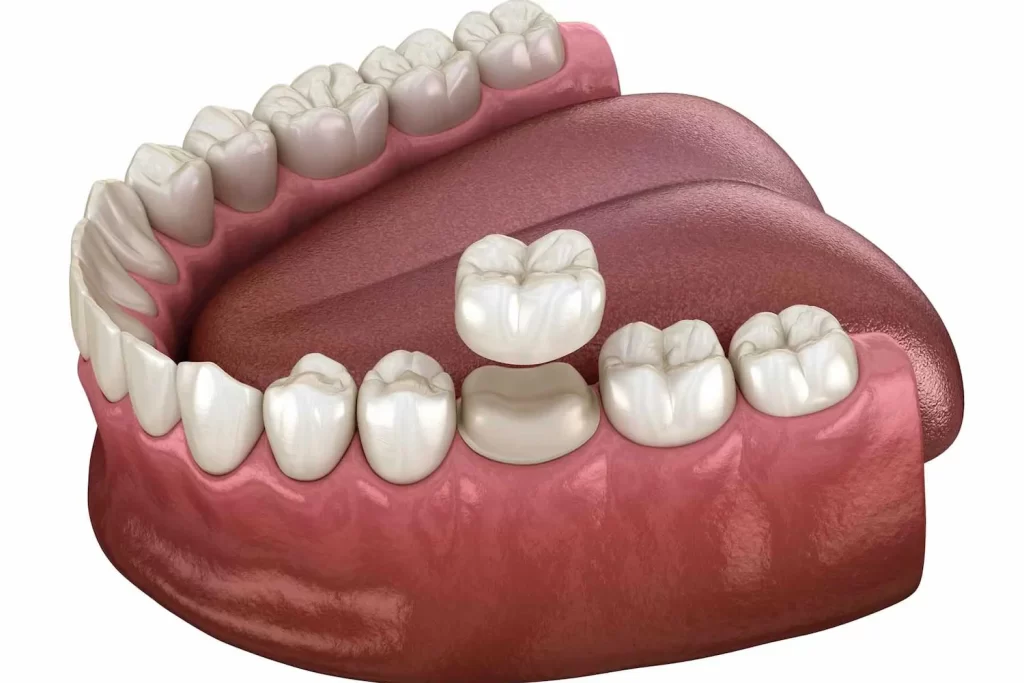
A crown covers a tooth completely, holding it together from the outside rather than filling a hole on the inside. It is what we recommend when a tooth no longer has enough of itself left to be relied on — and it is an excellent way to have that tooth both look good and stay structurally sound.
A crown is usually the right answer when a tooth has:
- A crack running through a cusp or under an old filling
- A filling so large that more repair than tooth is holding it
- Broken during a meal, or in an accident
- Had root canal treatment and become brittle
- Worn down flat from years of grinding
- An implant beneath it waiting for its restoration
Not sure whether your tooth needs one? Come in and we will show you the x-ray and say plainly whether a filling will still do. Call 850-404-7462 or book online.
The Trouble With Old, Large Fillings
Old large fillings often develop cracks and leakage, and where that goes next is tooth loss or a root canal. It is the single most common reason we end up talking to a patient about a crown, and it is worth understanding why.
A big filling leaves thin walls of tooth on either side of it. Those walls flex a little every time you chew. Flex them a few thousand times a year for twenty years and one of two things happens:
- A crack starts at the edge of the filling and travels down the tooth
- The seal at the margin fails, and decay works its way in underneath where no brush can reach it
Both are painless for a long time. The warning most people get is a sharp jolt when they bite on something in a particular way, which is a cracked cusp moving. Caught at that point, a crown wraps the tooth and holds those walls together. Left alone, the crack reaches the nerve and the conversation becomes root canal treatment or extraction instead.
We Offer Same-Day Crowns
The traditional route takes two appointments a couple of weeks apart: prepare the tooth, wear a temporary, come back for the real crown once the lab has made it. It works, and for some cases it is still the better choice.
Where a case allows it, though, a same-day crown means:
- One appointment instead of two, and one lot of numbing instead of two
- No temporary crown to come loose on a bagel a week before the fit
- No two weeks of a prepared tooth being sensitive to cold air
- No second trip across town, and no second afternoon off work
It also matters in an emergency. A crown that has come off, or a tooth that has broken badly, can often be dealt with properly the same day rather than patched and rebooked — which is why this sits alongside our emergency dental care.
How a Crown Is Fitted
-
Diagnosis and the Plan
An x-ray and an examination tell us how much sound tooth is left, whether the nerve is healthy and whether a crown is genuinely the right call. If a large filling would still serve you well, we will say so — a crown is a bigger commitment and should earn its place.
-
Preparing the Tooth
With the tooth numb, any decay and failing old filling material comes out, and what remains is shaped so the crown has an even thickness all round. Where the tooth is badly broken down, a core is built up first to give the crown something solid to sit on.
-
Matching and Making
We record the prepared tooth and the way your teeth meet, and the shade is chosen against the teeth either side. The crown is then made — the same day where the case allows it, or by a laboratory, in which case you wear a temporary in the meantime and we see you again in a couple of weeks.
-
Fitting and the Bite
The crown is tried in, checked at the margins and against the teeth next to it, and adjusted until your bite feels like your own. Only then is it cemented. You will be asked to bite, slide and grind on marking paper more than once — a crown a fraction too tall is the usual cause of a sore tooth weeks later.
Frequently Asked Questions Dental Crowns in Tallahassee, FL
Ten to fifteen years is a fair expectation, and plenty of crowns go well past that. What ends them is rarely the crown itself — it is decay at the margin where the crown meets the tooth, or a fracture in the tooth underneath.
Both of those are influenced by things you control: flossing around the margin, wearing a night guard if you grind, and keeping your exams so a margin that is starting to leak is spotted early.
The appointment is done with the tooth numb, so it is pressure and vibration rather than pain — much like having a filling, only longer. Most patients are surprised by how ordinary it is.
Afterwards the tooth and the gum around it can be tender for a few days, particularly if the gum was retracted to reach the margin. Ordinary pain relief covers it. Sharp pain on biting, or sensitivity that is getting worse, is worth a call rather than a wait.
No, and the two are separate decisions. Most crowns go on teeth with perfectly healthy nerves — the tooth simply needs protecting.
It runs the other way more often: a tooth that has had root canal treatment usually needs a crown afterwards, because the procedure leaves it more brittle and prone to splitting. If a nerve turns out to be dying under a tooth we are crowning, we will tell you before the crown is made, not after.
That is the aim, and modern ceramics make it achievable — the shade is picked against your own teeth and the shape copies the tooth we are replacing.
One piece of sequencing matters: a crown holds whatever color it is made in, and whitening gel does nothing to it. If you are planning to whiten your teeth, do it first and let the shade settle, so the crown is matched to the smile you are keeping.
Keep the crown, do not try to glue it back with anything from a hardware store, and call us. Losing a crown exposes the tooth underneath to decay and sensitivity, and the teeth beside it will start to drift if the gap stays open.
Often the same crown can simply be re-cemented. Where the tooth underneath has decayed, a new one is needed — and in many cases that can be made the same day. This counts as an emergency appointment, so call rather than waiting for a routine slot.
Crowns are restorative work, and most dental plans pay a share of one when it is needed for a clinical reason. We are in-network with most PPO providers and bill your plan for you, and you will have your portion in writing before the appointment is booked.
Without insurance, our membership plan takes 20% off procedures completed at our practice — on a crown, that discount is usually worth more than the plan costs for the year.